Core Process · Fused Deposition
FDM 3D printing: the workhorse that hits deadlines
Fused deposition modeling lays down molten thermoplastic in precise toolpaths — the most widely trusted 3D printing process on earth, and the one we reach for when a part needs to exist tomorrow without breaking the budget.
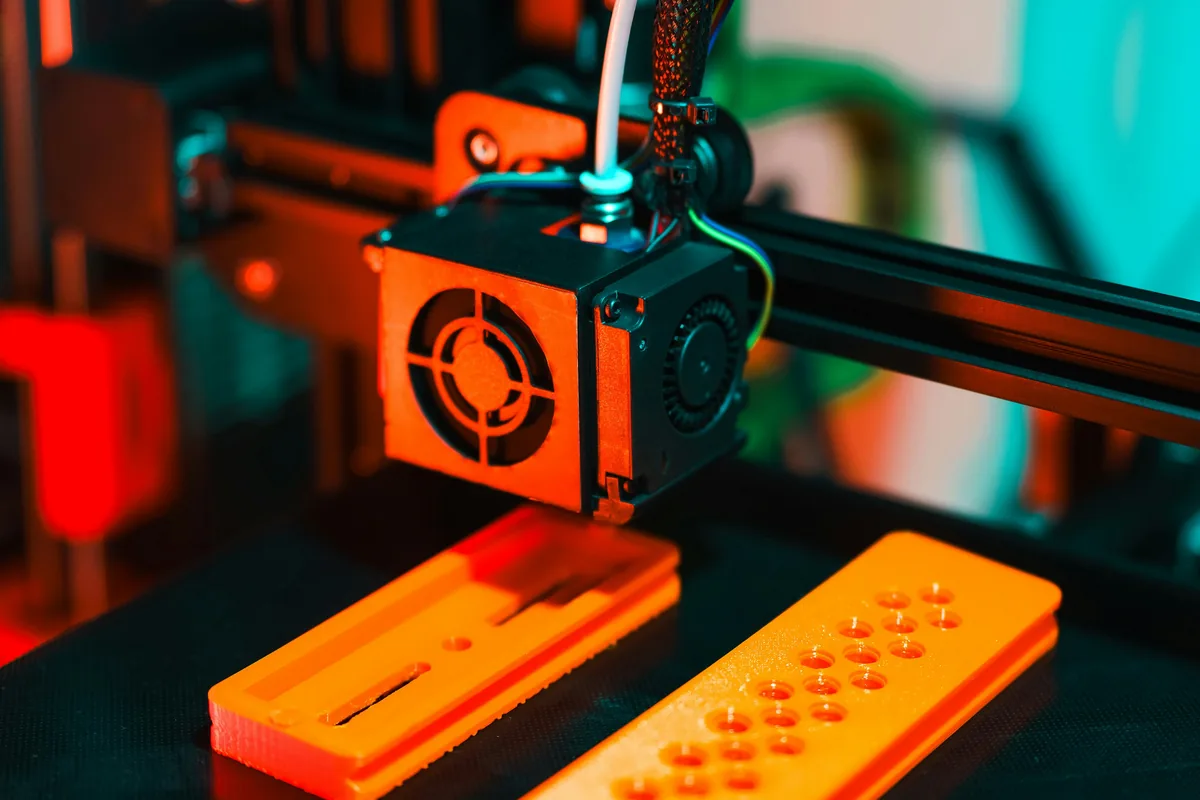
Why FDM earns its keep
FDM offers the best strength-per-dollar in additive manufacturing. It's the right answer for engineering iterations, brackets, fixtures, jigs, enclosures, fit-check prototypes and any part where function outranks a flawless surface.
Large build volumes and quick material swaps also make FDM the economical engine behind short production runs — dozens or hundreds of identical parts without tooling.
A filament for every job
Prototyping on a budget calls for PLA. Parts living outdoors or under load step up to PETG. Heat and impact resistance point to ABS, and anything that needs to bend, grip or cushion gets flexible TPU. Mixed feelings? Say so in the quote form — matching material to duty is half of what we do.
| FDM at a glance | |
|---|---|
| Layer height | 100–300 microns |
| Typical tolerance | ±0.2% (±0.2 mm floor) |
| Surface finish | Visible layers / functional |
| Materials | PLA · PETG · ABS · TPU |
| Best for | Function, speed, economy |
| Standard lead time | 1–3 business days |
| Rush | Same-day possible in NYC/NJ |
Where FDM shines
Common FDM applications
Engineering iterations
Print Monday's idea Monday. Cheap enough to test five variants instead of arguing over one.
Jigs & fixtures
Shop aids and assembly guides that pay for themselves on the first production shift.
Enclosures & housings
Electronics boxes and device shells with mounting bosses and snap features printed in.
Big, light forms
Volume on a budget — the backbone of many retail display builds.
Price your FDM part right now
FDM quotes are our fastest of all — simple parts often come back priced within the hour during business time.