Core Process · Selective Laser Sintering
SLS 3D printing: nylon parts built to be used
Selective laser sintering fuses nylon powder with no support structures at all — every surface finishes the same, complex geometry costs nothing extra, and the parts behave like the injection-molded components they often replace.
What makes SLS different
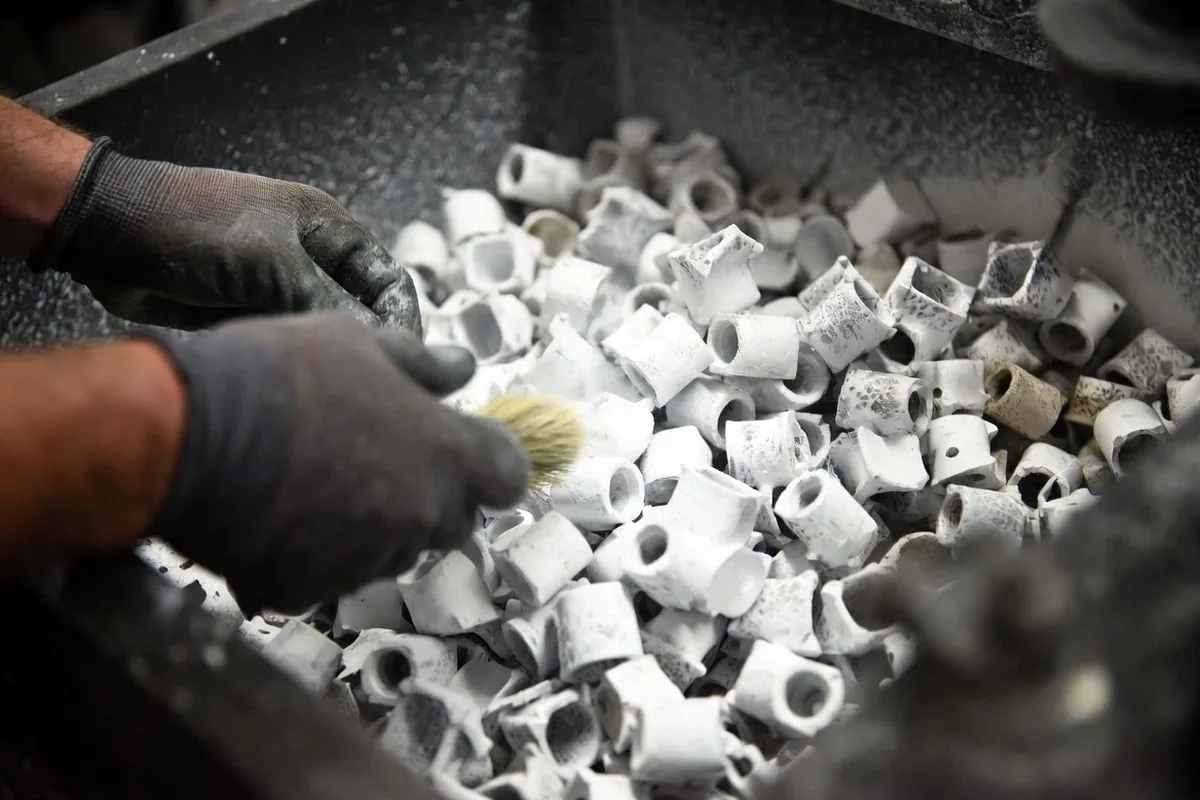
In SLS, unfused powder supports the part as it builds — so interlocking assemblies, internal channels, lattices and living hinges print as single pieces that would be impossible to mold and miserable to assemble.
The output is Nylon PA12: tough, chemically resistant, slightly flexible in thin sections and consistent enough for genuine end-use. That's why SLS is where prototyping graduates into low-volume manufacturing — the hundredth part matches the first.
Design freedom, priced honestly
Because nesting many parts in one powder bed drives efficiency, SLS rewards batching: quoting ten housings together often costs meaningfully less per unit than ten separate orders. Mention your total program quantity and we'll price the curve, not just the piece.
| SLS at a glance | |
|---|---|
| Layer height | ~100 microns |
| Typical tolerance | ±0.3% (±0.3 mm floor) |
| Surface finish | Uniform matte, lightly grained |
| Material | Nylon PA12 |
| Best for | Complex, functional, end-use |
| Standard lead time | 3–5 business days |
| Supports required | None — powder-supported |
SLS in the wild
Common SLS applications
End-use components
Clips, housings, ducts and brackets installed in real products, not just shown in meetings.
Print-in-place assemblies
Hinges, chains and mechanisms that come out of the powder already working.
Drone & robotics parts
Latticed airframes and mounts where the strength-to-weight math has to close.
Bridge production
Sellable inventory while injection tooling is still being cut — or instead of it entirely.
Put nylon to work on your design
Send the file and your intended use — we'll confirm wall thicknesses and quote the run, from one piece to one thousand.