Industry · Fashion, Costume & Show Fabrication
3D printed fashion pieces fabric physically can't become
When a collection needs geometry — lattices that move with a body, architectural silhouettes, pieces that photograph like the future — printing is the only atelier that can sew it. Costume designers, stylists and show producers bring us the impossible mood boards — for one runway exit or a whole touring cast.
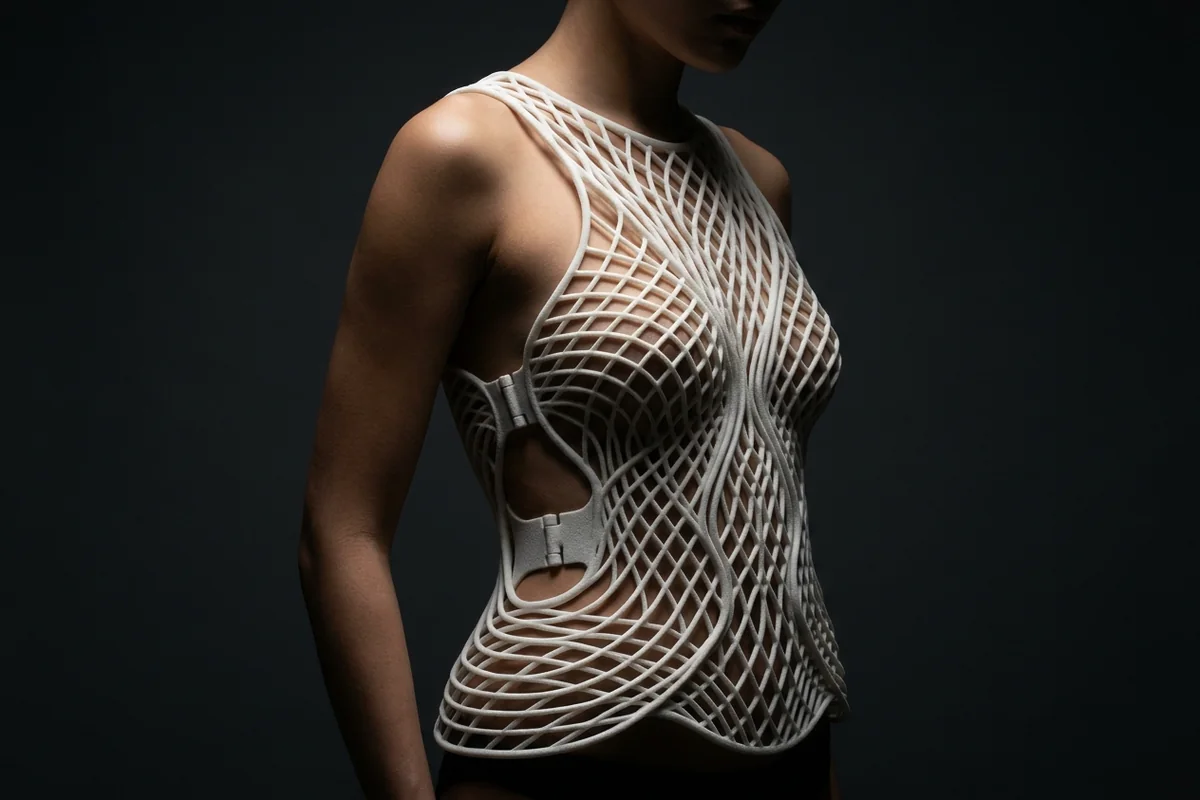
Three fashion lanes
Runway & editorial: sculptural statement pieces — bodices, headwear, armor-like structures — engineered light enough to wear for a show and strong enough to survive backstage. Costume & tour fabrication: character builds, armor sets and headpieces for stage and touring productions — fitted to performers, duplicated for casts and covers, with spares and repair kits that travel with the show. Wearables: flexible TPU and SLS nylon pieces mapped to the body via 3D scanning.
Body-first engineering
A wearable print is a mechanical problem wearing couture: weight distribution, flex zones, attachment points, skin comfort. We solve those with the designer rather than after the fitting — hinged sections, hidden fastening, and finishes from raw technical texture to lacquered gloss via fabrication finishing.
Model measurements or a body scan lock the fit; show-week revisions ride the rapid prototyping lane. Design studios still bring us crisp SLA casting masters and prototype ranges before metal is committed.
| Fashion work at a glance | |
|---|---|
| Runway pieces | Lightweight engineered structures |
| Costume & tour | Cast multiples, spares & repairs |
| Flexibles | TPU · thin-wall SLS nylon |
| Fit method | Measurements or body scan |
| Finish range | Raw technical → high gloss |
Make the lookbook piece real
Send sketches or files and the show, tour or call date — fashion calendars are brutal and we quote accordingly, fast.